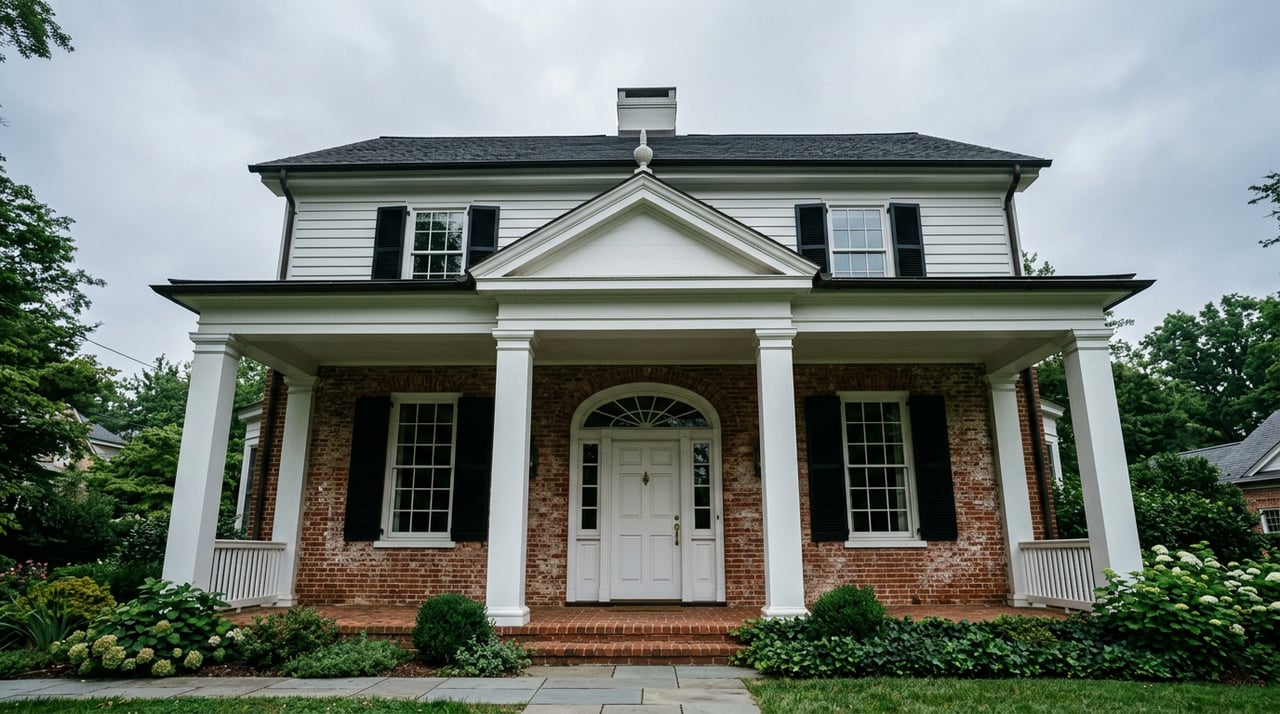
Picture the moment most buyers stop researching. They've pulled up Dahlonega's zoning map, found the parcel they're eyeing near the Chestatee River, confirmed it isn't marked R-1, and closed the laptop satisfied. Short-term rentals are allowed here. Box checked.
That moment is usually where the real due diligence hasn't started yet.
Dahlonega's zoning ordinance turns out to be the most permissive document a short-term rental buyer will encounter in this whole process. The rules that actually decide whether a property can operate as an Airbnb live somewhere the zoning map never shows: inside a homeowners association's covenant book, and inside the paperwork sequence a parcel has to follow the moment it sits outside the city line instead of inside it.
What the City's Own Rulebook Says
Start with what the city actually regulates, because it's shorter than most buyers expect. Under Article VIII of Dahlonega's zoning ordinance, short-term rentals are permitted in every zoning district except single-family R-1. Operators pay a flat $100 annual STR license fee on top of a standard business and occupational tax certificate, and before that license is issued the city runs a code-compliance check and a fire marshal inspection. From there the operating rules are practical rather than restrictive: one off-street parking space per bedroom at a minimum of 9 by 20 feet, no more than three 96-gallon trash cans with no commercial dumpsters allowed, and property boundaries that have to be clearly marked and approved by the Community Development Department.
Set next to how some nearby jurisdictions handle this, that's a genuinely light touch. Atlanta caps STR operators at two licenses citywide and actively cross-references Airbnb and VRBO listings against its own registration database to flag anyone operating without one. DeKalb County's new ordinance moved into full enforcement in early 2026, adding registration, noise compliance, and emergency contact disclosure requirements that Dahlonega's ordinance doesn't ask for. Against that backdrop, a $100 annual fee and a parking-space count feel almost incidental.
Which is exactly the problem. Because the city's rulebook is short and easy to satisfy, it's easy to mistake it for the entire test.
The Rule That Never Shows Up on Any Map
Achasta is the clearest example of why zoning compliance and actual permission to operate are two different questions. It's a 750-acre gated golf community wrapped around a Jack Nicklaus signature course and the Chestatee River corridor, and none of its zoning would trigger the city's R-1 exclusion. By the ordinance alone, a homeowner there could apply for an STR license. Achasta's own HOA rules restrict short-term rentals anyway, closing off that option regardless of what the zoning map permits.
That override isn't unique to Achasta. Other communities in the area, including Stoneybrook and Mountain Park, have their own STR policies that have to be verified covenant by covenant rather than assumed from the neighborhood's general reputation. Georgia law treats HOA restrictions and deed covenants as enforceable even in jurisdictions with no formal STR ordinance at all, which means a homeowners association can shut the door on rental income entirely, independent of anything the city or county has written down.
None of this shows up cross-referenced on a listing sheet or a zoning layer. It shows up in the actual recorded covenant document, which is the one piece of paper a buyer chasing rental yield has the most reason to read cover to cover and often has the least reason to expect will matter.
Cross the City Line and the Order of Operations Flips
Inside Dahlonega's city limits, the process runs in a straightforward line: confirm the zoning district, apply for the license, pass inspection, start operating. Step outside city limits into unincorporated Lumpkin County and that sequence reverses in a way that catches buyers off guard.
Lumpkin County's own government site is explicit that an applicant must have an approved Land Use Permit before the county will issue the combined Business and Short-Term Rental License. The permit itself is only valid for six months. For a buyer purchasing a rural tract or mountain property outside city limits with a target season in mind for launching a rental, that six-month window starts running immediately, and if the business license side of the process gets delayed by notarized supporting documents, driver's license verification, or staff review, the land use permit can lapse before the operator ever reaches the point of listing the property.
Layered on top of that timing risk is the tax side. Lumpkin County raised its hotel-motel tax from 5 percent to 8 percent effective August 1, 2023, and that increase still applies to any occupancy in the unincorporated county today. Platforms like Airbnb and VRBO generally remit state and local hotel-motel tax automatically, but any host who takes bookings directly, outside those platforms, remains responsible for collecting and remitting that 8 percent themselves. The county did simplify one part of this in 2024 by dropping Host Compliance as its STR tracking platform, which streamlined the application side even as the permit-before-license sequencing adds a step a buyer moving from a straightforward in-town purchase wouldn't anticipate.
Same Ordinance Question, Three Different Answers
| Layer | What governs it | The real friction |
|---|---|---|
| City of Dahlonega (non-R-1 zoning) | Article VIII of the zoning ordinance | $100/year license, inspection required, but process is linear |
| Achasta and similarly restricted HOAs | Private covenant, independent of city zoning | Can prohibit STRs outright regardless of zoning district |
| Unincorporated Lumpkin County | County Land Use Code | Land Use Permit required before business license, valid only 6 months, 8% hotel-motel tax |
Three parcels can sit within a few miles of each other and produce three completely different answers to the same question, and the zoning map alone will only ever get a buyer to the first row of that table.
Why the Sequence Matters More Than the Fee
None of the dollar figures here are large enough to change a deal on their own. A $100 license and a county business filing fee are rounding errors against a purchase price. The actual cost sits in time and assumption. An investor who assumes rental income starts the month after closing, without having read the HOA's actual covenant language or without having started a Land Use Permit application before a slow closing eats into that six-month clock, can lose an entire season before ever listing a property.
The practical order of operations, for anyone evaluating a Dahlonega-area property specifically for short-term rental income, runs opposite to how most people research it. Read the recorded HOA covenant document first, not the marketing packet, since silence on short-term rentals in an older covenant doesn't necessarily mean they're allowed. Confirm next whether the parcel sits inside city limits or in unincorporated Lumpkin County, since that single fact determines whether the license process runs in a straight line or requires a time-limited permit first. Check the zoning district against the R-1 exclusion only after those two questions are answered. The license application itself, and the parking and trash requirements that come with it, are the easiest part of the whole process and the last thing that should determine whether an offer goes in.
A Few Questions Worth Asking Before You Close
If a property already operates as a short-term rental, does the license transfer to the new owner? Not automatically. STR licenses are generally tied to a specific owner and property, so a buyer shouldn't assume an existing rental history conveys with the sale without confirming it directly with the issuing jurisdiction.
What if the HOA covenant doesn't mention short-term rentals at all? County guidance on this points the other direction from what most buyers assume: an association typically needs to state that short-term rentals are prohibited for that restriction to hold up, which means an older covenant that's simply silent on the topic isn't a green light. The only way to know for certain is to read the full recorded document or ask the HOA board directly.
Is Dahlonega more restrictive than other North Georgia mountain markets? On paper, no. The ordinance itself is lighter than what Atlanta or DeKalb County now require. The friction here comes from private covenants and the county's permit-before-license sequencing, not from the city's own rulebook.
If you're evaluating a specific Dahlonega parcel for its rental potential, or trying to figure out what a property you already own could earn as a short-term rental, this is exactly the sequence Chad Williams walks investors through before an offer goes in, not after. Request a Free Home Valuation to start that conversation.