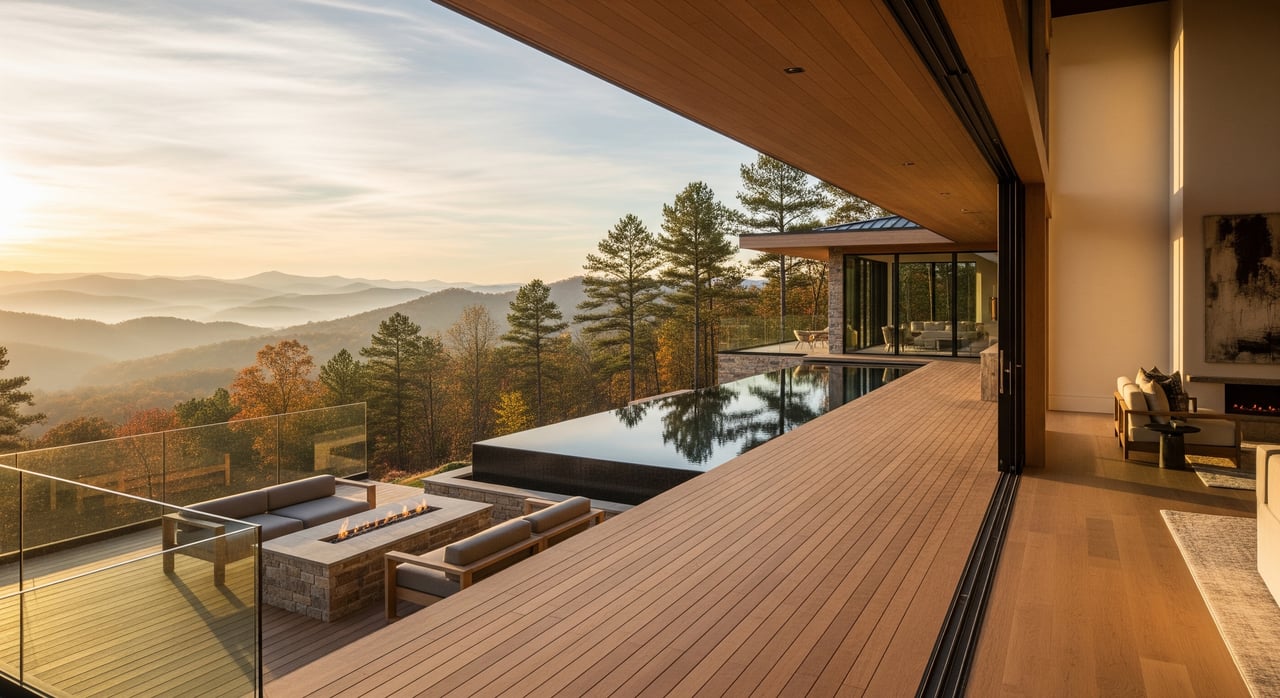
Is a mountain view in Dawsonville worth more when you go to sell? If you’re eyeing a ridgeline from your back deck or shopping for a home with a long-range vista, you’re asking a smart question. Views can be a real asset, but the premium depends on quality, permanence, and what local buyers will actually pay. In this guide, you’ll learn how views are valued in 30534, what appraisers look for, how to measure a view premium with local comps, and how to market a view so it shows up in your sale price. Let’s dive in.
Why views can add value
Mountain views are an amenity that many buyers love. They add daily enjoyment, privacy, and a sense of exclusivity. When a view is rare and reliably unobstructed, buyers tend to pay more for it.
Value also shows up in how fast a home sells. Strong views can attract more attention and shorten days on market, provided the property still checks boxes for access, utilities, and condition. Remote or steep sites may sell slower if tradeoffs are too steep.
Appraisers recognize view as a feature in the sales comparison approach. If a comparable sale lacks a similar view, the appraiser makes an adjustment supported by market data. The key is proof. Clear photos, matched comps, and evidence of how the market reacts to views help justify any adjustment.
Dawsonville view types and context
Where the views come from
Dawsonville sits in the northern Georgia foothills with sightlines toward the southern Blue Ridge. In 30534, “mountain views” often mean long-range ridgelines and forested valleys. Lot elevation, home orientation, and tree cover matter. Deciduous trees can create seasonal shifts, with wider views in winter and more screening in summer.
What local buyers prioritize
The Dawsonville buyer pool blends local commuters to metro Atlanta, regional outdoor-lifestyle buyers, and move-up homeowners seeking acreage and privacy. Many mountain-view buyers also look for proximity to parks and trails, along with acceptable drive times to job centers. A clear view plus practical livability tends to outperform a view alone.
Local constraints and risks
- Vegetation growth can narrow views during leaf-on months.
- Future building on nearby parcels may block views if no easements exist.
- Steep lots can increase maintenance and insurance, and require careful due diligence on slope and soils.
- Utilities and road access can reduce a premium if they are costly or limited.
These factors do not eliminate value, but they can shape how much a buyer pays and how confidently an appraiser can support a premium.
How much is the premium?
There is no one-size-fits-all number for 30534. The right way to estimate a premium is to compare recent local sales with and without similar views, while controlling for size, age, condition, lot size, and location. Here’s a practical approach you can use or ask your agent to run.
Step 1: Define the view
Use clear categories so results are consistent:
- Panoramic or sweeping ridgeline: broad, unobstructed, long-range.
- Partial: a defined slice of mountains from some rooms or the deck.
- Seasonal: wider in winter, more screened in summer.
- Protected vista: backed by public land or a recorded easement.
Be specific about where the view is enjoyed: main living area, kitchen, primary suite, deck, or yard.
Step 2: Build your comp set
Pull recent closed sales in 30534 or the immediate trade area. Prioritize the same subdivision, ridgeline, or micro-market when possible. Match homes on key attributes: square footage, beds and baths, age, condition, lot size, and access. Note which comps have a similar view category.
Step 3: Use paired sales or a simple model
- Paired sales: Compare two very similar sales where one has the view and one does not. The difference helps isolate the view effect.
- Simple regression: If you have enough local sales, include a variable for view category plus other property features. This can reveal an average percentage premium for each view level.
Whichever route you take, the goal is to estimate what the non-view price would have been, then calculate the difference as a percent of that baseline.
Step 4: Time and location adjust
If the market has shifted since a comp sold, apply a time adjustment. Keep comps as local as possible to avoid blending location premiums with view premiums.
Useful metrics to track
- Premium as a percent of price: The most intuitive for sellers and appraisers.
- Price per view-adjusted square foot: Good for quick comparisons.
- Days on market and list-to-sale ratio: View homes may attract stronger offers in the right segment.
The key takeaway: lead with method, not a headline number. Let local sales data for 30534 show what buyers are paying for your specific view quality.
What appraisers and lenders expect
Document the view clearly
Appraisers typically want:
- Photos from main living areas, decks, and street showing the view.
- Comparable sales with similar view characteristics and photos.
- A short narrative describing the view’s scope and permanence.
- Notes on whether the view appears stable, such as public land behind the sightline or the lack of immediate build risk.
Reduce appraisal risk as a seller
You can help an appraiser support the premium by providing a compact packet:
- Interior and exterior photos that clearly show the view.
- Drone stills or short clips for context, labeled with vantage points.
- A simple map or elevation profile showing sightlines to nearby ridges.
- Recent, local comps with similar views and a brief paired-sales summary.
- Any documentation about view easements, zoning, or neighbor development plans.
Lender and investor sensitivity
Lenders rely on appraisals supported by market evidence. If the appraiser cannot justify a view adjustment with data, the lender will not accept it. Unique or higher-end properties may trigger a second appraisal or a broker opinion, so solid documentation is essential.
Marketing your mountain view
Photo and media checklist
- High-resolution stills from each primary room with a view.
- Wide shots and close crops to show scale and ridgeline detail.
- Daytime and golden-hour images for clarity and warmth.
- Drone context showing the home in the landscape, plus approach shots for access.
Drone best practices
Commercial real estate marketing with drones must follow FAA Part 107 rules. Use a certified operator, respect privacy, and follow any HOA or local constraints. For appraisals, short, geolocated clips and labeled stills are more useful than long cinematic reels.
Lifestyle positioning with facts
Show nearby parks, trailheads, and regional access with factual distances and typical drive times. This supports buyer lifestyle goals without overpromising. If possible, include leaf-on and leaf-off photos to set clear expectations.
Be accurate about permanence
Do not advertise a view as protected unless you have a recorded easement or a public land buffer. Include any relevant documents in your file and be ready to share them with buyers and appraisers.
Buyer checklist for view due diligence
If you are purchasing a view home in Dawsonville, slow down and verify details before you write the final offer:
- Visit at different times of day and, if possible, during different seasons.
- Ask for recent photos from leaf-on and leaf-off periods.
- Review county maps for lot lines, topography, and any easements.
- Check utility access, road conditions, and slope-related maintenance needs.
- Ask about known plans on nearby parcels that could affect the view.
Land and acreage considerations
For land buyers, the view premium depends on buildability as much as scenery. Confirm that the building site can physically capture the view from the planned main rooms. Consider driveway grades, septic locations, and tree management. A spectacular ridgeline means less if the practical costs or constraints make the home design unworkable for your budget.
The bottom line for 30534
Yes, mountain views can add value in Dawsonville. The size of that value depends on how rare and reliable the view is, how well the home functions for everyday life, and how clearly you document the market’s response. If you define the view, run a tight comp set, and present strong media and data, you’ll put yourself in the best position to capture a premium at sale and support it at appraisal.
If you’re considering selling a view property or shopping for one, we can help you quantify the view effect with local comps, prepare an appraisal-ready packet, and market the lifestyle with professional, compliant media. Reach out to Chad & Julie M Williams to Request a Free Home Valuation.
FAQs
Do mountain views add value in Dawsonville?
- Yes, views are an amenity that can add value when they are high quality, perceived as stable, and supported by local comparable sales.
How much more do buyers pay for a mountain view in 30534?
- There is no single number; estimate the premium using paired local sales or a simple model that controls for size, condition, location, and time.
How do appraisers treat views in Dawson County?
- Appraisers document the view with photos and comps, then make market-supported adjustments based on evidence of buyer reaction in recent local sales.
What can reduce a view premium in Dawsonville?
- Potential future obstructions, summer foliage, steep or costly access, limited utilities, and a lack of strong local comps can all reduce the premium.
How should a seller present a mountain view in marketing?
- Use clear, high-resolution interior and exterior photos, drone context from a certified operator, labeled maps or elevation images, and factual distance details.
Can a view be protected from future obstruction?
- Sometimes; recorded view or conservation easements and public land buffers can help, but without them, protection is limited by zoning and neighbors’ rights.